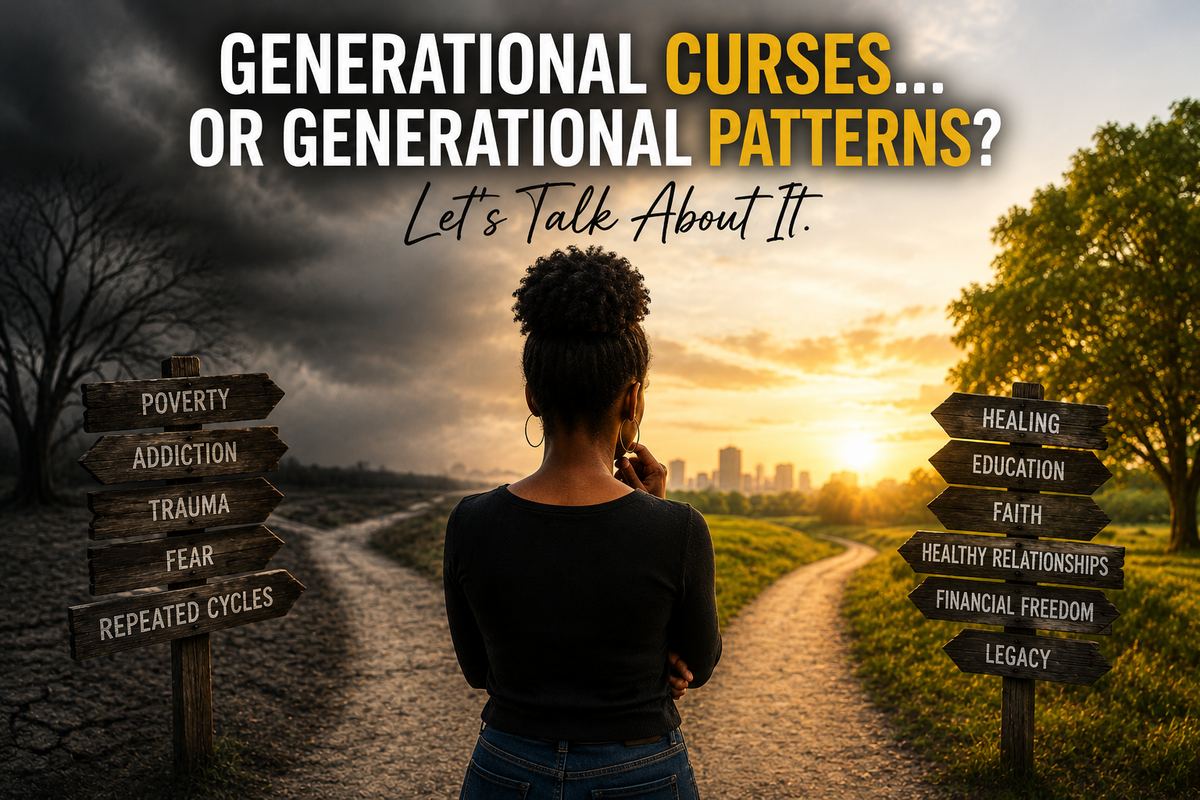
Breaking Generational Curses… or Breaking Generational Patterns?

Published by Provoking Perspectives
Written by The Perspective Desk
“Breaking generational curses” has become a familiar phrase in churches, motivational speeches, social media posts, and everyday conversations. People often use it when discussing financial hardship, addiction, unhealthy relationships, family conflict, trauma, or other struggles that seem to repeat across generations.
But what do we really mean when we use that phrase?
Are families confronting a spiritual curse, a learned generational pattern, or a combination of both?
This conversation is not about dismissing anyone’s faith or telling people what they must believe. It is an invitation to think more deeply about how experiences, beliefs, habits, and coping mechanisms can be passed from one generation to the next.
Psychologists often describe these repeated experiences using terms such as intergenerational trauma, family systems, and learned behavior. Children learn by observing the adults around them. They may inherit attitudes about money, relationships, education, conflict, mental health, and personal responsibility—not through biology alone, but through the environments in which they are raised.
Many people of faith understand repeated family struggles through a spiritual lens. Prayer, repentance, faith, and spiritual guidance may play an important role in how they pursue healing. For others, counseling, education, mentorship, financial literacy, and intentional behavior change are essential parts of breaking destructive cycles.
These approaches do not always have to compete.
Faith may give someone the strength to seek counseling. Therapy may help someone recognize a family pattern they have prayed about for years. Financial education may provide practical tools for changing a cycle of instability. Community support may help a person maintain the progress they have begun.
History also matters.
Black families in the United States have lived through slavery, forced family separation, Jim Crow, discriminatory housing policies, unequal educational opportunities, and economic exclusion. These conditions affected family stability, wealth accumulation, neighborhood resources, and access to opportunity across generations.
Recognizing that history does not eliminate personal responsibility. It provides context.
Some people inherit pain they did not create. Some inherit survival habits that once protected their families but may no longer serve them. Others inherit positive traditions, including faith, resilience, entrepreneurship, community service, creativity, and determination.
The goal should not be to reject everything inherited from previous generations. The goal should be to examine it.
Which traditions strengthen us?
Which behaviors harm us?
Which lessons should we preserve?
Which cycles should end with us?
Whether we call the struggle a curse, a cycle, or a pattern, awareness is the beginning of change. We cannot transform what we refuse to acknowledge.
Every generation passes something forward. It may be money, property, wisdom, discipline, trauma, silence, fear, faith, or emotional health.
The most important question may not be, “What did I inherit?”
The more important question may be:
What am I choosing to leave behind?
Frequently Asked Questions
What is a generational curse?
A generational curse is generally understood as a spiritual condition or consequence believed to affect a family across multiple generations. Interpretations vary among religious traditions and Christian denominations.
What is a generational pattern?
A generational pattern is a repeated belief, behavior, coping mechanism, communication style, or family dynamic passed from one generation to another through observation, experience, and environment.
Are generational curses and generational patterns the same thing?
Not necessarily. A generational curse is primarily a theological or spiritual concept. A generational pattern is generally discussed through psychological, behavioral, and social frameworks. Some people believe both perspectives can help explain repeated family struggles.
Can trauma be passed from one generation to another?
The emotional, relational, and behavioral effects of trauma can influence future generations. Children may learn fear, distrust, emotional withdrawal, hypervigilance, or unhealthy coping strategies from adults who experienced unresolved trauma.
Does understanding history remove personal responsibility?
No. Historical context helps explain how certain conditions developed, but it does not mean individuals and communities are powerless. Understanding the past can help people make more informed decisions about the future.
How can someone begin breaking an unhealthy pattern?
The process may include honest self-reflection, prayer, counseling, education, financial planning, mentorship, healthier relationships, accountability, and supportive community connections. Different people may need different combinations of support.
Can positive patterns also be passed down?
Yes. Families can pass down resilience, faith, work ethic, educational values, entrepreneurship, cultural pride, healthy communication, service, and strong community relationships.
Join the Conversation
Do you believe repeated family struggles are primarily spiritual, psychological, historical, or a combination of all three?
Watch the full episode, share your perspective, and join the conversation with Provoking Perspectives.
Subscribe to the newsletter at https://www.provokingperspectives.org.
Join the Perspective Collective on Skool for deeper discussions, community connection, and exclusive updates. The link is available in the episode description.
Provoking Thought. Shifting Perspectives.